X-ray Wildflower Backgrounds: A Detailed Digital Paper Collection
The intersection of natural elegance and scientific precision is a fascinating space for designers. When we look at botanical art, we often see lush, painted watercolors or crisp vector illustrations. However, there is a niche aesthetic that blends the skeletal structure of flora with the softness of blooming flowers. This is the visual territory occupied by X-ray Wildflower Backgrounds. These digital papers offer a unique perspective, revealing the internal architecture of petals and stems in a way that is both ethereal and grounded in reality. For creators in the scrapbooking, junk journaling, and paper crafting communities, this collection presents a distinct departure from standard floral prints.
The Visual Anatomy of the Collection
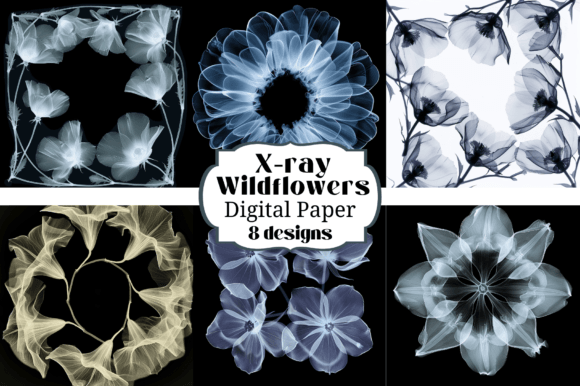
At its core, this collection features eight distinct digital paper backgrounds. The defining characteristic of these illustrations is the "X-ray" effect. Instead of opaque, solid colors typical of standard floral patterns, these images possess a translucency. They mimic the look of botanical radiographs or vintage scientific diagrams, but with a distinctly artistic flair. You will notice intricate vein structures within the leaves and petals, highlighted against varying background tones. This creates a layered depth that is hard to achieve with traditional illustration methods.
The color palette in these X-ray Wildflower Backgrounds tends to be moody and sophisticated. While specific hues vary across the eight files, the overall vibe leans toward vintage and muted tones—think dusty blues, sepia, soft greys, and deep botanical greens. This makes them incredibly versatile. They are not overly bright or cartoonish, which allows them to serve as a grounding element in a design rather than a chaotic distraction. The "personality" of these papers is mysterious, organic, and slightly avant-garde. They evoke a sense of curiosity, inviting the viewer to look closer at the natural details that are usually hidden from the naked eye.
Practical Applications for Crafters and Designers
Understanding the visual style is one thing; knowing how to deploy it is another. Because these are high-resolution PNG files, the applications are broad and varied. For the scrapbooker or junk journal enthusiast, these backgrounds serve as exceptional "base layers." Standard scrapbook pages can sometimes feel flat. By using an X-ray wildflower background, you instantly introduce a complex texture and a focal point. They work particularly well for heritage layouts, nature-themed journals, or Halloween projects where a slightly spooky, organic feel is desired.
For digital creators and small business owners, these assets are valuable for branding and marketing materials. If you run a botanical shop, a wellness brand, or a boutique clothing line that values natural fibers, these backgrounds can elevate your social media graphics. Imagine an Instagram post for a new product launch using an X-ray floral background. It provides a textured, premium look that stands out in a feed dominated by flat colors and generic stock photos.
Card making is another area where these designs shine. The detailed line work of the X-ray style looks stunning when printed on cardstock. You can use them as a full background for a greeting card, or cut out specific floral elements to create 3D, layered decoupage effects. Because the files are labeled and organized, it is easy to find the specific pattern you need, streamlining the creative workflow.
Integrating with Typography and Brand Identity
A common question when using such distinct backgrounds is how to handle typography. Since the X-ray Wildflower Backgrounds are visually complex, they demand careful consideration of font pairing. You want to maintain readability and visual hierarchy. A heavy, ornate script font might get lost in the intricate vein structures of the flowers. Instead, consider using a clean sans serif font for body text. The geometric simplicity of a sans serif provides a pleasing contrast to the organic chaos of the floral anatomy.
For headlines or branding logos, a bold serif font or a structured display font can work well. The key is to ensure there is enough contrast. If the background is dark and detailed, your text should be light and bold. This interplay between the background and the typography is crucial for professionalism and readability. These backgrounds are not just decoration; they are part of your brand identity. Using them consistently across your packaging design or editorial design can help create a cohesive aesthetic that signals to your audience that you value detail and creativity.
Technical Specifications and Usage Tips
From a technical standpoint, this collection is designed for ease of use. The files are delivered as PNGs, which is the industry standard for this type of asset. Unlike JPEGs, PNGs support transparency (though these specific backgrounds appear to be filled, the format preserves the crispness of the lines). The listing emphasizes that the files are "MUCH LARGER than the samples shown here." This is a critical point for print projects. High resolution ensures that when you print these designs for commercial products like posters or book covers, the lines remain sharp and the gradients smooth.
When downloading, you will receive a zip file containing eight separate images. It is good practice to unzip these files on a desktop computer rather than a mobile device to ensure the file structure remains intact. Once extracted, you can import them into your preferred software. For paper crafters, this might be a printing interface. For digital designers, this could be Adobe Photoshop, Illustrator, or Procreate.
One practical tip for using these X-ray Wildflower Backgrounds is to experiment with blend modes. If you are using them digitally, try setting the layer to "Multiply" or "Overlay." This can change the interaction between the background and other design elements, allowing the texture to merge seamlessly with solid colors or other images. This technique is particularly useful in web design and social media graphics, where you might want to create a unique header image that doesn't look like a standard template.
Evaluating Project Fit
Not every project calls for an X-ray aesthetic. It is important to evaluate the fit. These backgrounds are excellent for projects that require a touch of the macabre, the scientific, or the vintage. They are perfect for a biology textbook cover, a gothic romance novel interior, or a high-end boutique's lookbook. However, they might not be the best choice for a cheerful children's party invitation or a bright, summery retail flyer. The mood is specific, and leaning into that specificity will yield the best results.
Ultimately, the X-ray Wildflower Backgrounds collection offers a sophisticated set of tools for the creative professional. They bridge the gap between science and art, providing a textured, high-quality foundation for a wide range of projects. Whether you are designing a logo, curating a junk journal, or creating a marketing campaign, these digital papers provide a unique visual language that speaks to the beauty of natural complexity. By pairing them with the right typography and understanding their technical strengths, you can produce work that is both visually arresting and professionally polished.